Summary
Thinking about leadership coaching but not totally sure what it is, what it costs, or whether you actually need it? This is the honest rundown: what leadership coaching really is (and isn't), what to look for in a coach, what it costs, and how to tell if you're ready. I'm a licensed therapist who spent over a decade in corporate before becoming a coach for high achievers, so I'll give it to you straight.
The Short Version (for all my skimmers)
Leadership coaching helps an already-capable leader change what's quietly getting in their way, working on both the strategy and the psychology behind it.
It's different from therapy (therapy helps you heal, coaching helps you go from okay to great) and mostly the same as executive coaching, just a broader label.
A full program usually runs $5,000 to $50,000. Mine is $5,000 for 12 sessions over about six months.
It's the right move if you're successful, done with surface-level advice, and at some kind of inflection point. It's not for anyone hoping to be handed the answers.
Curious if it's a fit? There's a free consultation invitation at the bottom. No pitch.
I've really gotten into watching cult documentaries lately.
And every single time, without fail, I find myself staring at the screen going: "THAT guy? Really? Ewwwwww."
And here's what cult docs taught me about leadership.
The most effective leaders, just like the most effective cult leaders (unfortunate comparison but stay with me), aren't running on authority alone.
People aren't following them because they have to. They're following them because they actually want to.
And that's the difference between a leader who gets compliance and a leader who gets buy-in.
If you're searching for leadership coaching, chances are you already have the title. You have the team. You have the responsibility.
What you want is for it to actually work.
For people to move. For decisions to stick. For the culture you're trying to build to actually take hold.
That's exactly what leadership coaching is for.
What leadership coaching really is
Most people have no idea what coaching actually is.
Not to rag on them, but even some coaches (usually newer ones) are confused.
They think it's like having a really expensive accountability buddy.
Or therapy but for work (we’re getting closer here!).
Or someone who asks a lot of questions and never actually answers any of them.
Good coaching helps you figure out what's actually getting in your way. And then helps you change it in a way that sticks.
Not "I had a great session and then went back to my old ways by Thursday" change. Actual change that people notice.
How you handle the tough conversation
How you start leading, instead of managing
How you stop sending emails in all caps at 3am
Therapy focuses on healing.
Consulting tells you what to fix.
Mentorship tells you what someone else would do.
Coaching helps you figure out what YOU should do. And then actually do it.
The best coaching goes one layer deeper than tactics. Because most leaders already know what they're supposed to do.
The harder question is why they're not doing it or why it’s not working.
What leadership coaching is not
If you've ever watched your organization send a leader off to coaching, you know how this usually goes.
They come back with a new vocabulary.
They stop interrupting in meetings for about two weeks.
They start saying things like "I hear you" with an expression that suggests they do not, in fact, hear you.
And then a month later they're back to sending email nastygrams at 11pm.
Turns out, two weeks is about how long behavior change lasts when nothing underneath actually shifts.
Most coaches are either really good at the feelings stuff or really good at the strategy stuff. Rarely both.
So you get great insight with no real-world application.
Or solid tactics with no understanding of why you keep sabotaging them.
Good coaching does both. In the same conversation.
A personality assessment you do once and forget about isn’t going to cut it.
Neither is someone who just validates everything you do (you could just use ChatGPT for that).
Good coaching is more than a safe space to process your feelings. Although honestly? That part matters too.
Who else are you going to vent to?
Your boss? No way.
Your team? Please, God, no.
Your spouse? Bless them, they try their best.
Sometimes you need someone completely outside your situation who will actually listen, tell you the truth, find your blind spots, and then help you figure out what to do next.
That's part of it. But good coaching doesn't stop there.
Who leadership coaching is for
Leadership coaching isn't for everyone. And not everyone is ready for it (for example, it’s not for people still trying to figure out the basics)
It works best for people who are:
Already successful and want to be even more successful
Willing to look honestly at what’s getting in their way (even if that’s, ahem, themselves)
Done with surface-level advice
Ready to think and lead at a higher level
Maybe you're a senior leader, a VP, a director, a founder. Maybe you've been in your role for years or maybe you just stepped into a bigger one and you want to make the most of it.
But regardless of job title, leadership coaching is for anyone who has high standards and is ready to maximize their momentum and impact.
Some people come to leadership coaching because something isn't working. The team isn't moving, the decisions feel harder than they should, or they're effective but it's costing them more than it should.
And some people come because they're ambitious as hell and they want to see what's actually possible when they're operating at their best. Not just surviving the week. Actually leading at the level they know they're capable of, without the burnout that comes with pushing harder.
Both are the right reason.
What to look for in a leadership coach
There are a lot of us out here. The market is crowded, the certifications are easy to get, and everybody's got a framework with a clever name. So how do you pick?
A few things I'd look for:
Someone who does both the strategy and the psychology. Most coaches are good at one. You want the person who can tell you what to do and get at the reason you haven't done it yet. That's the combination that makes change stick.
Someone who won't be intimidated by you. You're accomplished. If a coach is a little starstruck or afraid to push you, they're useless to you. You need someone who'll tell you the truth even when you don't love it.
Someone who's qualified to go deep. A weekend certification is not the same as years of training in how people actually think and change. Ask what's behind the coaching.
And then the one that matters most, which no certification can fake:
*** Can you be real with this person?*** We know you have a polished, holding-it-together version you bring to work..But can you be real?
Because research shows the biggest predictor of whether coaching works is the relationship (frameworks and credentials are great, but they’re bonuses).
If you get on a call and you're still performing, keep looking.
What happens in leadership coaching?
You've decided coaching might be the thing. But what does it actually look like?
Are we just going to talk about your feelings for six months? (No. Some feelings. But not six months of them.)
Here's the shape of it. Together, we:
1 - Get clear on where you actually are. What's working, what's making you want to throw your laptop out a window, and where your energy is leaking out.
2 - Find what already works. You got here for a reason. There's usually gold in what you're already doing well. We want to do more of that.
3 - Name the real gap. This is rarely the one you walked in with. You think you need to be "more decisive in meetings." Three sessions in, we realize you're waiting for permission to speak that nobody's going to hand you.
4 - Make the identity shift. This is the part most coaching skips. If you want to operate at the next level, you have to show up as that person now, before the title catches up.
I had a client gunning for director who kept framing everything around execution, because that's what got him promoted for a decade. The work was getting him to think like a director while he was still in the old role, so he could walk into the new role feeling confident and capable.
5 - Build the plan, and the obstacles become the to-do list. Every "yeah but what about my boss, what about the politics, what about the fact I've never done this" goes on the list. Then we work the list instead of letting it talk you out of things.
6 - Execute and troubleshoot. Twice a month you go try things in the real world. You come back, we look at what worked and what blew up, fix it, and you go again.
This isn’t a workbook or rigid 12-week curriculum that's identical for every client.
We use this framework to build a program that works for you - using your strengths to address your unique challenges.

How much does leadership coaching cost?
Let's talk money, because lots of coaches make you sit through a whole sales call before they'll tell you the price (I find that annoying. Hello, I’m too busy to get on a call only to have sticker shock, mmkay?)
Here's the honest landscape:
Executive and leadership coaching programs usually run anywhere from $5,000 to $50,000, depending on the coach and the scope.
Independent coaches tend to charge $250 to $450 a session.
The big enterprise firms charge $600 to $1,500 and up.
I charge $5,000 for my full program. That's 12 sessions over about six months, plus support in between when something blows up and you need a quick gut check before a Tuesday meeting.
So I'm not the cheapest option (I'm not trying to be).
The bargain coaches are usually long on encouragement and short on anything that actually changes.
I'm also not the $25,000 enterprise package with a slide deck and a 360 review nobody reads.
Here's the math you might want to do: What is it costing you to stay where you are?
The promotion you keep not getting.
The decisions you're sitting on.
The Sunday nights you spend dreading Monday.
The version of you that's running at maybe 70% because something's in the way and you can't quite name it.
That has a price too (but it’s easier to ignore because it doesn't show up on an invoice).
How to know if you're ready
There's no quiz for this (yet!).
But after a few hundred of these conversations, I can usually tell pretty quickly who’s ready for coaching.
Here's what readiness looks like:
You're successful and it's still not landing right. From the outside you're crushing it. From the inside something's off, and you're done pretending it isn't.
You're done with superficial advice. You've read the books. You've done the frameworks. You have a spreadsheet and 20 Claude conversations going (you know who you are). But you’re still going in circles. More information isn't what’s missing.
You're willing to look at your own part in it. Not in a beat-yourself-up way. Just an honest "okay, some of what's getting in my way is me" way. That self-awareness is the whole starting line.
You want to be held to a higher standard, not just encouraged. You're not looking for someone to nod along and tell you you're doing great. You want someone who'll challenge you, tell you the truth, and then help you do something with it.
You're ready to move. Maybe a little scared, but ready. The leaders who get the most out of this tend to make the call and commit, instead of researching it for another eight months.
But let’s be super real here - Coaching isn’t for everyone.
If you want someone to hand you the answer and do the work for you, I'm not your person.
The clients who thrive have high expectations of me AND for themselves.
They show up ready, they do the reps between sessions, and they get results.
If that sounds like you, we should talk.
Ready to move?
If you’ve read this far, you’re probably not just browsing.
So here’s what comes next…I do a free consultation and it’s exactly what it sounds like.
We get on a call
You tell me what’s going on
And we figure out if working together is your best move
It’s easy peasy. And I pinky swear that there’s no sales pitch or pressure or a surprise upsell to a $40,000 retreat in Sedona.
If it’s a fit, great. If not, we’ll brainstorm what option might serve you better.
So even if we don’t work together, you’ll leave that call clearer than when you got on it.
I’m based on Denver and work with leaders all over the world (most of my coaching happens over video, so location isn’t a dealbreaker).
If you’re a high achiever who’s ready for what’s next, apply for a consultation below.
And let’s figure out your next move.
Read this next
Why you're ready for the next level but can't seem to get there - if the "I know I'm capable of more but I'm stuck" feeling is hitting close to home.
Why being the best at your job isn't enough to get ahead - the trap that catches a lot of high performers right before the next step.
The mental load of leadership nobody talks about - for when the job looks fine from the outside but is actually costing you.
And if you're specifically weighing executive coaching, here's how I work with executives and aspiring leaders.
Frequently asked questions about leadership coaching
Q: What does a leadership coach actually do?
A: A leadership coach helps you figure out what's getting in the way of leading well, then helps you change it in a way that sticks. The best ones work on two levels at once: the strategy (what to do) and the psychology (why you're not already doing it). It's less about handing you advice and more about helping you become the kind of leader who doesn't need the advice next time.
Q: What actually happens in leadership coaching?
A: Most leadership coaching happens in a series of one-on-one sessions over several months. You work with the coach to get clear on where you are, identify what's actually holding you back, and build a plan to change it, then you test that plan in real situations between sessions and troubleshoot what comes up. Good coaching blends strategy with the psychology underneath it, so the changes hold instead of fading in a week.
Q: What's the difference between a leadership coach and a therapist?
A: Therapy is designed to help you heal; coaching is designed to help you succeed. If something is genuinely keeping you from functioning, like depression, anxiety, or unprocessed trauma, that's therapy's job. If you're doing okay but you want to go from okay to great, that's coaching. There's real overlap, and good coaching doesn't ignore the psychological patterns underneath your behavior. (I'm trained as both a licensed therapist and a coach, though I don't act as my clients' therapist. Most coaches aren't therapists, and most therapists don't coach.)
Q: What's the difference between a leadership coach and an executive coach?
A: Not much, honestly. The terms are often used interchangeably. "Executive coaching" usually implies senior leaders or C-suite, while "leadership coaching" can apply to anyone leading people at any level. The work is largely the same: helping a capable person lead with more clarity, confidence, and impact. (If you're specifically looking for executive coaching in Denver, you can read more about how I work with executives here.)
Q: How much does leadership coaching cost?
A: Leadership and executive coaching typically runs $5,000 to $50,000 for a full program, depending on the coach's experience and scope. Independent coaches usually charge $250 to $450 per session; large enterprise firms charge $600 to $1,500 and up. Most coaches structure their work as a multi-session package over three to six months rather than one-off sessions.
Q: How long does leadership coaching take?
A: Most leadership coaching engagements run three to six months, often structured as around 12 sessions every other week. Some people move faster and shift to a lighter check-in schedule once things click; others continue longer to work on what's next. The timeline depends on what you're trying to change and how ready you are to do the work between sessions.
Q: Is leadership coaching worth it?
A: It's worth it if you're already capable and something specific is getting in your way, and not worth it if you're hoping someone will hand you the answers and do the work for you. The real question isn't the price of coaching. It's what it's costing you to stay stuck: the promotion you keep not getting, the decisions you sit on, the energy you burn working around the problem.
Q: How do I know if I need a leadership coach?
A: You're probably a good fit if you're successful but something feels off, you've outgrown surface-level advice, and you're ready to look honestly at your own role in what's not working. Coaching tends to help most when you're at an inflection point: a new role, a stalled one, or a growing sense that what got you here won't get you where you're going.

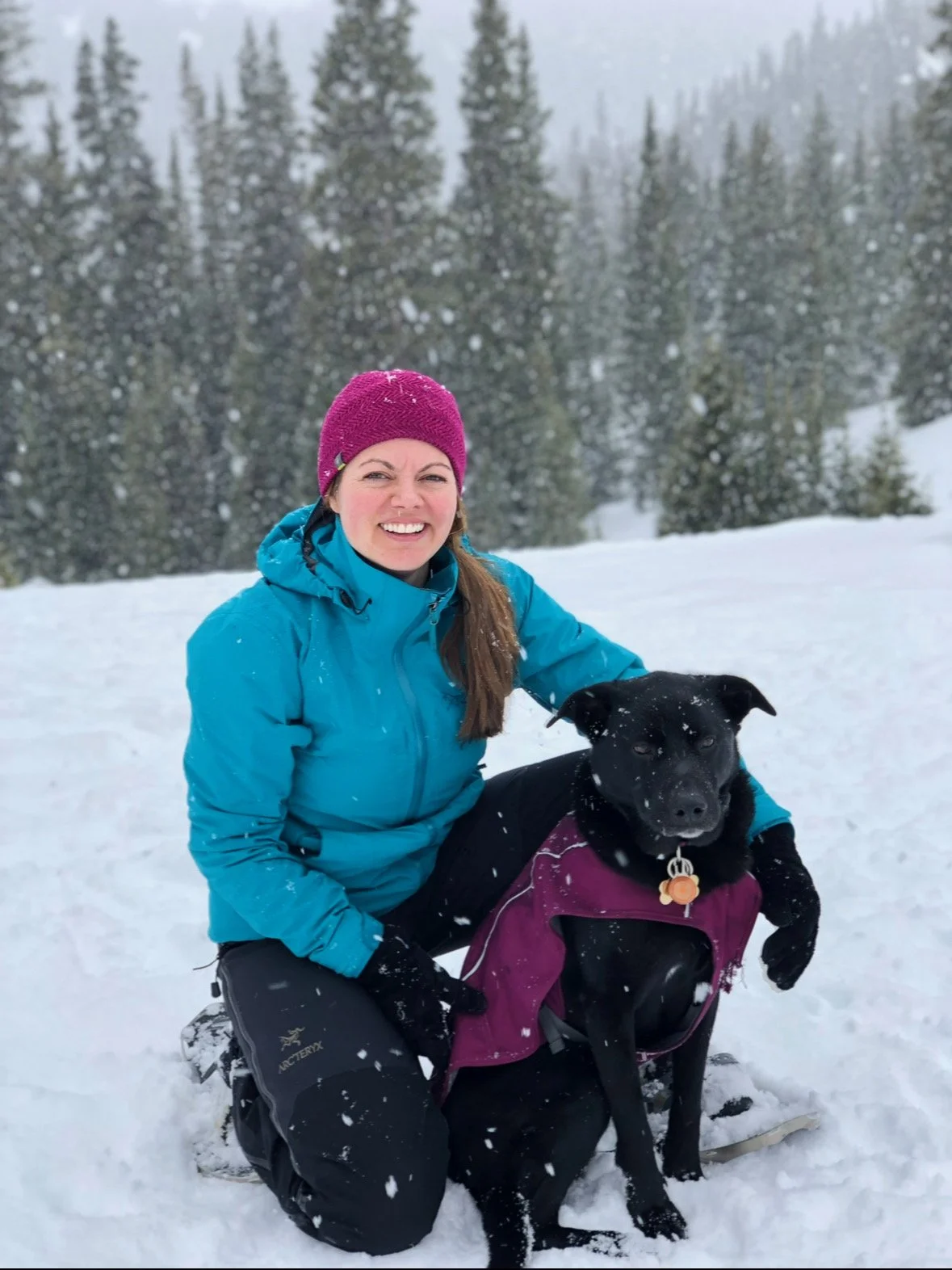
Hi! I’m Erica
Licensed psychotherapist. Corporate dropout. Wife to Brendan. Mom to twins + one. ADHDer. Slow runner. Coffee drinker. Swear words enthusiast.
I know exactly what it’s like to have a life that looks successful on the outside but feel chronically exhausted, frustrated, and completely lost on the inside.
I help underachieving high-achievers create lives and careers they love, without burning out.
What people are saying…



Let’s be friends! Follow me on Instagram